
Your Washing machine smells bad in Dubai’s humid climate mainly because of mold, mildew, and bacteria that thrive inside the drum, rubber door seal, detergent drawer, and drain filter. Dubai’s high humidity levels, often exceeding 80% during summer months, create the perfect warm and moist environment where these microorganisms grow rapidly. Leftover detergent residue, standing water in the drum, and poor ventilation inside the machine turn your appliance into a breeding ground for foul odors that eventually transfer onto your clothes.
24/7 Emergency Appliance Repair Dubai
When an appliance breaks down unexpectedly, especially during late hours or on weekends, having access to fast and reliable support is essential. Our appliance repair services are designed to handle urgent issues such as refrigerator failures, washing machine breakdowns, dryer problems, and oven malfunctions with quick response times. We also provide specialized refrigerator repair, washer repair, and dryer repair solutions to ensure your home appliances are restored efficiently. For customers across the city, dependable appliance repair in Dubai is available around the clock to keep your household running smoothly.
Why Dubai’s Climate Makes Washing Machine Odor Worse Than Anywhere Else
Most people assume a smelly washing machine is just a hygiene issue, but in Dubai, the problem goes much deeper than that. The city sits along the Persian Gulf coastline, and its coastal geography means air moisture levels stay consistently high throughout the year. When you factor in the combination of extreme heat and heavy humidity, you get indoor conditions that are genuinely ideal for bacterial and fungal growth inside home appliances.
During summer, outdoor temperatures in Dubai regularly push past 45 degrees Celsius. Inside homes and apartments, air conditioning runs almost around the clock, and while it cools the air, it can also create condensation on surfaces like washing machine drums, hoses, and rubber gaskets. This condensation does not evaporate quickly because the surrounding humidity keeps surfaces moist for longer periods. The result is a machine that never fully dries between cycles, which is exactly the condition mold and mildew need to grow and produce that distinctive sour, musty smell that so many Dubai residents recognize.
Understanding this climate connection is the first step toward fixing the problem properly rather than just masking it temporarily with fragrant detergents.
The Most Common Causes of Washing Machine Odor in Dubai Homes
Mold and Mildew Buildup on the Door Gasket
The rubber door seal on front-loading washing machines is the most notorious odor source in Dubai households. This gasket creates a tight seal to prevent water leakage during the wash cycle, but its folds and grooves trap water, detergent residue, hair, and lint after every single wash. In Dubai’s humid environment, this trapped moisture never gets the chance to dry out fully. Within days, mold spores that are naturally present in the air settle into those moist folds and begin multiplying.
You will usually notice a black or dark green discoloration along the rubber seal when mold is the culprit. The smell it produces is earthy and damp, almost like wet soil or old cloth that has been left in a bucket for too long. If your clothes come out of the machine with a faint musty odor even after washing, the door gasket is almost certainly the source.
Detergent Drawer Contamination
The detergent dispenser drawer is another area that Dubai residents often overlook when investigating washing machine smells. Liquid fabric softener in particular has a thick consistency that clings to the plastic compartments and gradually turns into a sticky residue. Over time, this residue absorbs moisture from the air and becomes a food source for bacteria and fungal colonies.
Many people in Dubai use both liquid detergent and fabric softener together, and they pour more than the recommended dose assuming that extra product equals cleaner clothes. This actually makes the odor problem significantly worse because undissolved detergent builds up inside the drum, the pipes, and the pump filter, fermenting over time and releasing an unpleasant sour odor during subsequent wash cycles.
Standing Water in the Drum and Sump Hose
Front-loading machines are particularly prone to retaining small amounts of water inside the drum after a cycle ends. This happens because the horizontal drum orientation means water does not drain completely by gravity alone. The remaining water sits in the lowest point of the drum or inside the sump hose connected to the pump. In a city like Dubai where ambient temperature is high even inside air-conditioned apartments, this standing water becomes warm and stagnant quite quickly, creating conditions where odor-causing bacteria such as Pseudomonas, Staphylococcus, and various anaerobic bacteria thrive without much resistance.
Blocked or Dirty Pump Filter
Every washing machine has a pump filter, usually located behind a small panel at the front bottom of the machine, and its job is to catch coins, lint, buttons, and debris before they reach the pump. In Dubai homes, this filter often goes months or even years without being cleaned. When it becomes clogged, water drains more slowly, increasing the time that moisture stays inside the machine. The trapped debris inside the filter also begins to decompose, and the combination of rotting organic matter and stagnant water produces a genuinely powerful and offensive smell that can fill a bathroom or laundry area very quickly.
Low Temperature Wash Cycles and Hard Water Deposits
Many Dubai residents use cool or cold water wash cycles to save electricity and protect delicate fabrics. While this is a reasonable choice for everyday clothing, washing consistently at low temperatures means the drum interior never gets hot enough to kill bacteria and dissolve fatty detergent residues. Over weeks of cold washing, a biofilm layer builds up on the drum walls, and this biofilm is a dense community of microorganisms embedded in a self-produced sticky coating that regular detergent alone cannot remove easily.
Dubai also has naturally hard water with high mineral content, particularly calcium and magnesium. These minerals combine with soap to form limescale deposits inside the drum, on the heating element, and throughout the internal pipes. Limescale creates a rough, porous surface texture that gives bacteria additional places to attach and grow, making odor problems worse and harder to eliminate without proper descaling treatment.
How to Identify Where the Smell Is Coming From
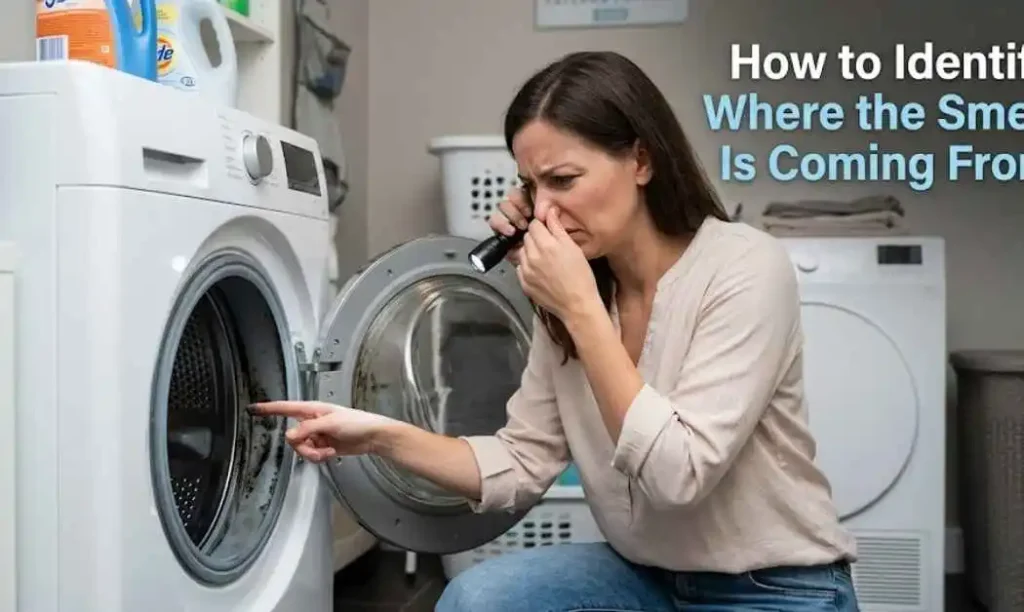
Before you can fix the problem effectively, it helps to understand exactly where in the machine the odor is originating. A quick diagnostic check can save you time and effort:
Run your fingers along the inside of the rubber door seal and check for black or grey discoloration. If you find it, mold on the gasket is your primary issue. Open the detergent drawer fully and look for residue that has hardened or turned discolored. Pull it out completely if possible and smell the compartment directly. Check the drum interior by running your hand along the back wall when the drum is dry. A slimy film or musty smell when the drum door has been closed all day points to biofilm buildup. Locate the pump filter access panel, usually at the front bottom of the machine, and carefully open it. The smell released from a dirty filter is usually the strongest and most pungent of all sources.
Step-by-Step Guide to Removing Washing Machine Odors in Dubai
Cleaning the Door Gasket Thoroughly
Mix equal parts white vinegar and warm water in a spray bottle and generously spray the entire rubber seal, making sure the liquid gets into every fold. Leave it to sit for at least fifteen minutes, then use an old toothbrush to scrub away mold deposits. For severe mold that has penetrated the rubber surface, a diluted solution of baking soda paste works well as a mild abrasive. Wipe everything down with a clean dry cloth and leave the door open for several hours afterward to allow full air drying.
Running a Hot Drum Clean Cycle
Most modern washing machines, including popular brands sold in Dubai like Samsung, LG, Bosch, Whirlpool, and Siemens, have a dedicated drum clean or tub clean cycle that runs at high temperature without any laundry inside. Run this cycle with either a commercial washing machine cleaner tablet or two cups of white vinegar poured directly into the drum. The high temperature dissolves biofilm, kills bacteria, and loosens limescale deposits that have built up over time. If your machine does not have a specific drum clean program, select the hottest available wash cycle at 90 degrees Celsius and run it empty.
Cleaning the Detergent Drawer
Remove the drawer completely by pressing the release tab and pulling it out. Soak it in warm water with a small amount of dish soap for twenty minutes, then scrub every compartment with a brush until clean. While the drawer is removed, clean the housing cavity behind it using a damp cloth or small brush, as residue accumulates there too and is a frequent source of mold growth.
Clearing and Cleaning the Pump Filter
Place a shallow tray and some old towels under the filter access panel before opening it, as water will spill out. Unscrew the filter cap slowly and allow the water to drain into your tray. Remove the filter completely and wash it under running water, removing all debris, lint, and buildup. Wipe inside the filter housing with a damp cloth before reinserting the clean filter and closing the cap securely.
Addressing Hard Water and Limescale
For Dubai residents dealing with limescale buildup, use a dedicated washing machine descaler every two to three months. Citric acid powder is a natural and effective alternative that dissolves mineral deposits without damaging rubber seals or internal components. Simply add two to three tablespoons of citric acid to the drum, then run a hot cycle without any clothes inside.
Preventive Maintenance Habits That Keep Odors Away in Dubai
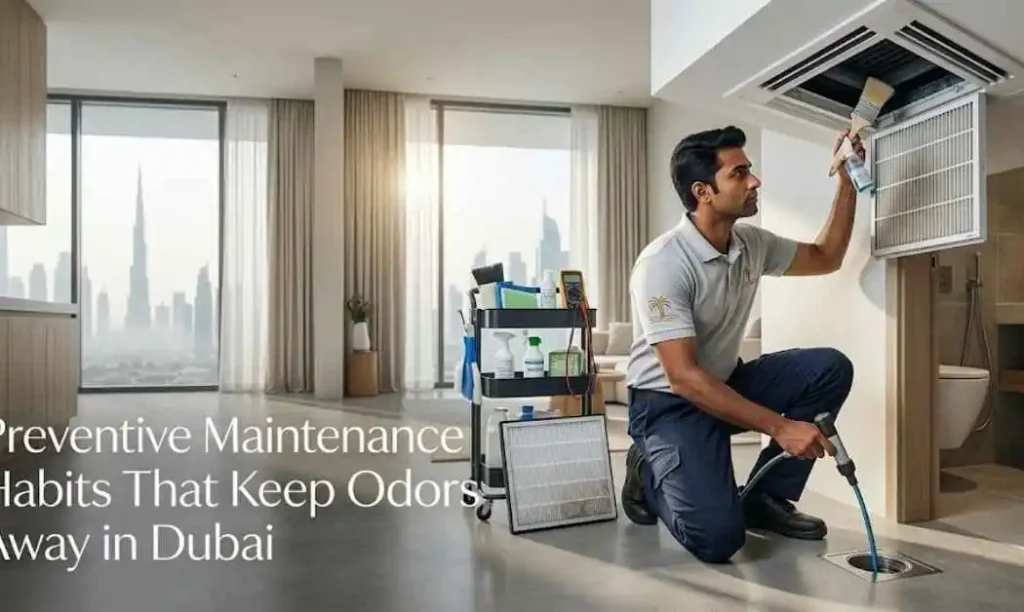
Keeping your washing machine smelling fresh in Dubai requires consistent habits rather than occasional deep cleaning sessions. After every wash, leave the machine door ajar for at least two to three hours. This simple habit allows air circulation inside the drum and prevents moisture from becoming trapped. Wipe down the rubber door seal with a dry cloth after each use, paying attention to the bottom fold where water naturally pools.
Switch to using less detergent than you think you need. Washing machine manufacturers design their detergent dosing recommendations based on standard water hardness levels, but in Dubai’s hard water conditions, excess detergent creates more residue rather than cleaner clothes. Using a high efficiency or low-foaming detergent formulated for hard water conditions reduces residue accumulation significantly.
Run a hot maintenance wash cycle at least once a month using either a commercial cleaner or white vinegar. This regular thermal treatment prevents biofilm from establishing itself deeply in the drum and hoses. Pull out the detergent drawer once a week and rinse it under running water to prevent softener and detergent from hardening inside the compartments.
When the Smell Could Indicate a Mechanical or Drainage Problem
Sometimes a persistent odor from your washing machine in Dubai is not just a cleaning issue but a sign of an underlying mechanical fault that needs professional attention. A burnt rubber or plastic smell during or after a cycle can indicate an overheating motor, a worn drive belt, or an electrical component that is deteriorating. This type of odor is sharp and chemical rather than musty and organic, and it should never be ignored as it presents a fire and safety risk.
A sewage or rotten egg smell that comes and goes, especially during or just after the drain cycle, often points to a blocked drain hose, a faulty drain pump, or a plumbing issue where the standpipe is not correctly vented. In Dubai apartments, washing machines are often connected to building drainage systems that can develop partial blockages or lose their water trap seal over time, allowing sewer gases to flow back into the machine.
If your machine smells strongly despite repeated cleaning attempts, or if the odor is accompanied by drainage problems, unusual vibrations, or error codes on the control panel, it is time to call a qualified washing machine repair technician rather than continuing to clean and hope for the best.
Choosing the Right Detergent for Dubai’s Water and Climate
One factor that significantly affects washing machine odor that most residents do not consider is detergent selection. Dubai’s water supply is primarily desalinated seawater that undergoes treatment before reaching homes, and while it is safe to use, its chemical composition differs from the soft water that most European and American washing machine detergents are formulated for.
In hard water conditions like those common in Dubai, standard detergents can leave behind a soap scum residue rather than rinsing away cleanly. Using a detergent that specifically mentions hard water compatibility or adding a water softening additive to your wash cycle helps the detergent dissolve and rinse away more completely, leaving less residue inside the machine to turn into an odor source.
Liquid detergents tend to leave more residue inside machines compared to powder detergents or concentrated pods, so switching your detergent format can make a noticeable difference over time. Fabric softeners, while popular, contribute significantly to residue buildup and are one of the leading causes of washing machine odors in the region, so using them sparingly or switching to dryer sheets is worth considering.
How Dubai’s Residents of Specific Areas Experience This Problem

Residents living near the coastline in areas like Dubai Marina, Jumeirah, Palm Jumeirah, and Jumeirah Beach Residence tend to experience washing machine odor problems more intensely than those living further inland. Coastal air carries higher salt and moisture content, which accelerates corrosion on metal components inside the machine and creates even faster mold growth on rubber parts.
Apartment residents in high-rise buildings throughout Business Bay, Downtown Dubai, and Deira often deal with the additional challenge of enclosed laundry spaces with very limited ventilation. When a washing machine sits in a cupboard or a windowless utility room, even normal levels of post-wash moisture have nowhere to go. Installing a small ventilation fan or leaving utility room doors open whenever possible helps manage moisture levels around the appliance and reduces odor development.
Villas and townhouses in Arabian Ranches, DAMAC Hills, and Mirdif typically have better ventilated laundry areas, but the seasonal humidity spikes that occur between June and September still create conditions where odor problems develop quickly if maintenance is not kept up consistently.
👉🏻Discover More About Unique Appliance Problems[ LG Washing Machine Leaking from the Bottom ]
Frequently Asked Questions
Why does my washing machine smell even after cleaning it?
If your machine still smells after cleaning, the odor source may be deeper in the drain hose, pump, or internal pipes that are not accessible through routine cleaning. Persistent odors despite thorough cleaning often indicate biofilm that has been building for months and requires multiple consecutive hot wash cleaning cycles to fully eliminate. A stubborn odor can also come from the sump hose or the external drain connection, which may need professional inspection and clearing.
Is it safe to wash clothes in a smelly washing machine?
While washing clothes in a machine with mildew or bacterial odor is unlikely to cause serious illness in healthy adults, the bacteria and mold present in a contaminated drum can transfer onto fabrics and potentially cause skin irritation, allergic reactions, or worsen respiratory sensitivities, particularly in children and people with allergic conditions. Clothes washed in a smelly machine can carry a faint unpleasant odor even after drying, so addressing the problem promptly is worthwhile for hygiene and comfort reasons.
How often should I clean my washing machine in Dubai?
Given Dubai’s climate conditions, a drum clean cycle should be performed at least once every two to three weeks, compared to the monthly recommendation that applies in cooler and less humid regions. The door gasket and detergent drawer should be wiped and rinsed once a week, and the pump filter should be cleaned and cleared once every month.
Does front-load or top-load washing machine smell more in Dubai?
Front-loading machines are more prone to developing persistent odors in Dubai’s climate because their horizontal drum retains more standing water and their rubber door seals create ideal mold-growing pockets. Top-loading machines are not immune to odor problems, but their vertical drum drains more completely and has no rubber door gasket, which makes them somewhat less vulnerable to the specific mold and mildew issues that make front-loaders notorious in humid climates.
Can using too much detergent cause my washing machine to smell in Dubai?
Yes, using excess detergent is one of the primary causes of washing machine odors in Dubai homes. When more detergent is used than the water and cycle can effectively dissolve and rinse away, the residue clings to drum walls, pipe interiors, and the pump filter. This residue ferments in the warm, humid conditions typical of Dubai laundry spaces and produces a sour or rancid smell. Reducing your detergent dose by about twenty to thirty percent from what you currently use is a practical first step.
What is that rotten egg smell coming from my washing machine in Dubai?
A sulphur or rotten egg odor from a washing machine is typically caused by anaerobic bacteria that grow in stagnant water inside the drain hose or pump. It can also result from a plumbing issue where the drain connection lacks a proper water trap, allowing sewer gases to enter through the machine. If cleaning the pump filter and running a hot maintenance cycle does not resolve this specific odor, the drain hose connection and building plumbing should be inspected by a qualified technician.
Why do my clothes still smell after washing them in Dubai?
Clothes that come out of the wash smelling musty or sour are usually picking up odors from a contaminated drum or a clogged drain system. The most common cause is mold on the rubber door seal combined with biofilm inside the drum. Running a drum clean cycle, thoroughly cleaning the gasket, and switching to a hot wash for at least one cycle per week will usually resolve this issue. If the problem continues after thorough machine cleaning, the issue may be with fabric softener residue on the clothing fibers themselves, which requires a hot water rinse cycle to remove.
When should I call a professional for a smelly washing machine in Dubai?
You should call a professional washing machine technician when the odor persists after multiple proper cleaning attempts, when you notice a burning or chemical smell during operation, when drainage is slow or incomplete, or when the machine shows error codes related to the drain or pump system. These signs suggest the problem has moved beyond what home maintenance can address and may involve mechanical faults, blocked internal pipes, or drainage system issues that require professional tools and expertise to diagnose and repair correctly.
Conclusion
A smelly washing machine in Dubai is not just an inconvenience, it is a direct result of the city’s unique climate conditions combined with everyday usage habits that most people do not realise are problematic. By understanding the specific roles that high humidity, hard water, inadequate ventilation, and excess detergent play in creating these odors, residents can take targeted and effective action rather than guessing their way through the problem.
If home maintenance steps do not fully resolve the issue, reaching out to a trusted washing machine repair service in Dubai like ProApplianceDubai ensures that deeper mechanical or drainage causes are properly diagnosed and fixed. Keeping your washing machine clean and properly maintained in Dubai’s demanding climate not only eliminates unpleasant odors but also extends the appliance’s lifespan, protects your clothes, and gives you complete peace of mind with every wash cycle.